SCHEDULE A TOUR

Care That Sees the Whole Person


In our intimate Rocklin home, we blend Montessori purpose, Somatic Embodiment, and Positive Approach to Care® into daily rhythms that honor who your loved one is and 

who they've always been.


Close-knit community with a curriculum designed for dignity.

Our Philosophy

Memory loss changes how someone experiences the world. It doesn't erase their lifetime of skills, preferences, or the deep human need to feel useful, safe, and seen.

We believe:

The environment is the intervention.

Clean, predictable, sensory-rich spaces reduce confusion and anxiety. When you walk into our Sacramento home, you'll notice immediately: hardwood floors, quality furniture, abundant natural light, a modern kitchen, a garden you'd want to sit in.  Beautiful, well-maintained spaces tell residents, "You are valued here." 

Purpose heals.

Folding your shirt isn't "busy work"—it's tapping into decades of procedural memory. Setting the table isn't a task—it's a meaningful role that says, "You still matter here." In our spacious kitchen, residents help prep vegetables. In our garden, they water raised beds. These are real contributions in a real home.

The nervous system leads.

Before we can connect, we must co-regulate. With only 6 residents, our caregivers have time to truly attune—using breath, tone, gentle touch, and grounded presence to help residents feel safe in their bodies.

Communication is care.

We speak at eye level. We use hand-under-hand guidance, not hand-over-hand force. We honor sensory sensitivities. We slow down. We listen to what behavior is communicating. Small size makes this possible—every staff member knows every resident deeply.

Family is medicine.

You know your loved one better than anyone. We partner with you—sharing observations, inviting participation, and creating space for connection in our home.

Family is medicine.

Before we can connect, we must co-regulate. With only 6 residents, our caregivers have time to truly attune—using breath, tone, gentle touch, and grounded presence to help residents feel safe in their bodies.

The Three Pillars of Our Curriculum

Pillar 1: Montessori Dementia Care — Purpose Through Familiar Roles

Dr. Maria Montessori believed all humans thrive when given purposeful work matched to their abilities. Many of our mentors have adapted these principles for dementia care, and the results are profound.
What this looks like in our Rocklin home:

  • Morning setup roles: Residents are invited to help set our dining table with placemats, utensils, napkins. They pour water into glasses. These are familiar procedural tasks that require no new learning—just gentle cueing. With 6 residents, everyone who wants to participate can.
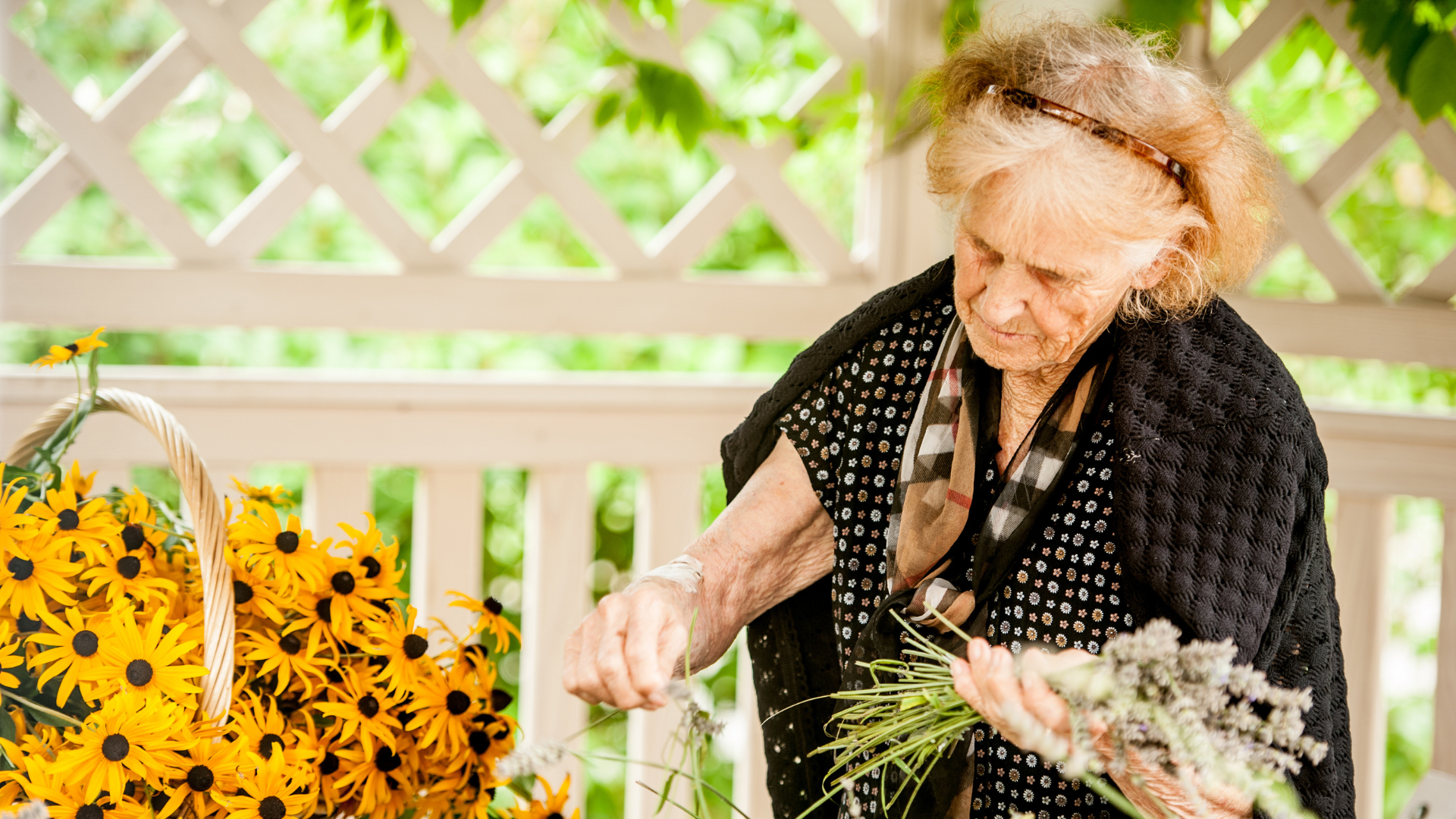
  • Garden & plant care: Our secure backyard garden has raised beds planted with herbs, tomatoes, and flowers. Residents water and harvest. The work is tactile, seasonal, and meaningful. One resident might water while another picks cherry tomatoes. There's room for everyone.
  • Meal prep participation: In our modern kitchen (not a kitchenette), residents peel carrots, snap beans, tear lettuce, stir batter. Safe, simple steps. Then we all sit together and eat what we made.

Why it works:

Procedural memory (how to do things) outlasts episodic memory (remembering events). A person who can't recall breakfast can still fold a fitted sheet perfectly. A man who gets lost in his own hallway can still plant seeds in soil. These tasks don't require verbal instruction—they live in the body. And when residents do them, they feel competent. Capable. Needed.

Our commitment:

Every activity is ability-matched. If folding full towels is too complex, we offer washcloths. If watering plants is overwhelming, we invite them to simply touch the leaves. We meet each person where they are—and we never infantilize. Our small size makes true individualization possible.

Pillar 2: Somatic & Embodied Care — Regulation Through Presence

Most memory care facilities focus on managing behaviors. We focus on regulating nervous systems.

When someone with dementia becomes agitated, it's often because their nervous system is dysregulated. No amount of words will fix that. But breath, touch, rhythm, and grounded presence can.

What this looks like at Clover Care:


  • Breath & co-regulation: When a resident is distressed, caregivers slow their own breathing, soften their gaze, and lower their voice. They don't talk more—they breathe more. In our quiet home, this works. In a loud facility with 40 residents, it's impossible.
  • Gentle touch protocols: Hand-under-hand guidance (not hand-over-hand control). Slow, warm hand massage with lavender oil in our comfortable living room. Light pressure on shoulders to ground. Always with permission, always with presence.
  • Sensory grounding: Weighted lap pads, soft blankets, textured fabrics to touch, essential oil diffusers, bird sounds from the garden, abundant natural light streaming through large windows. We engage all five senses to anchor residents in the present moment. Our home's design supports this—no fluorescent lights, no institutional smells, no sterile hallways.
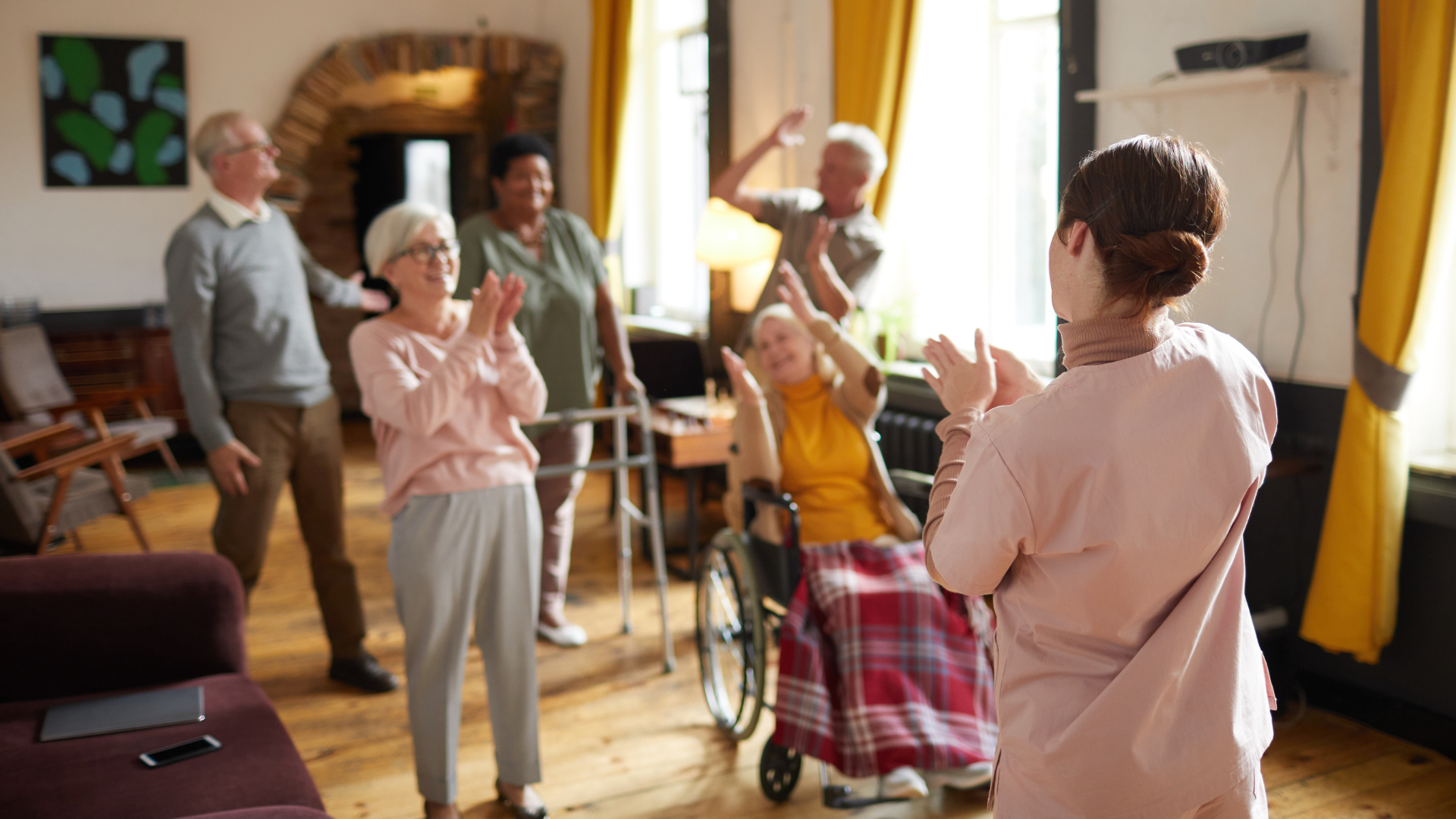
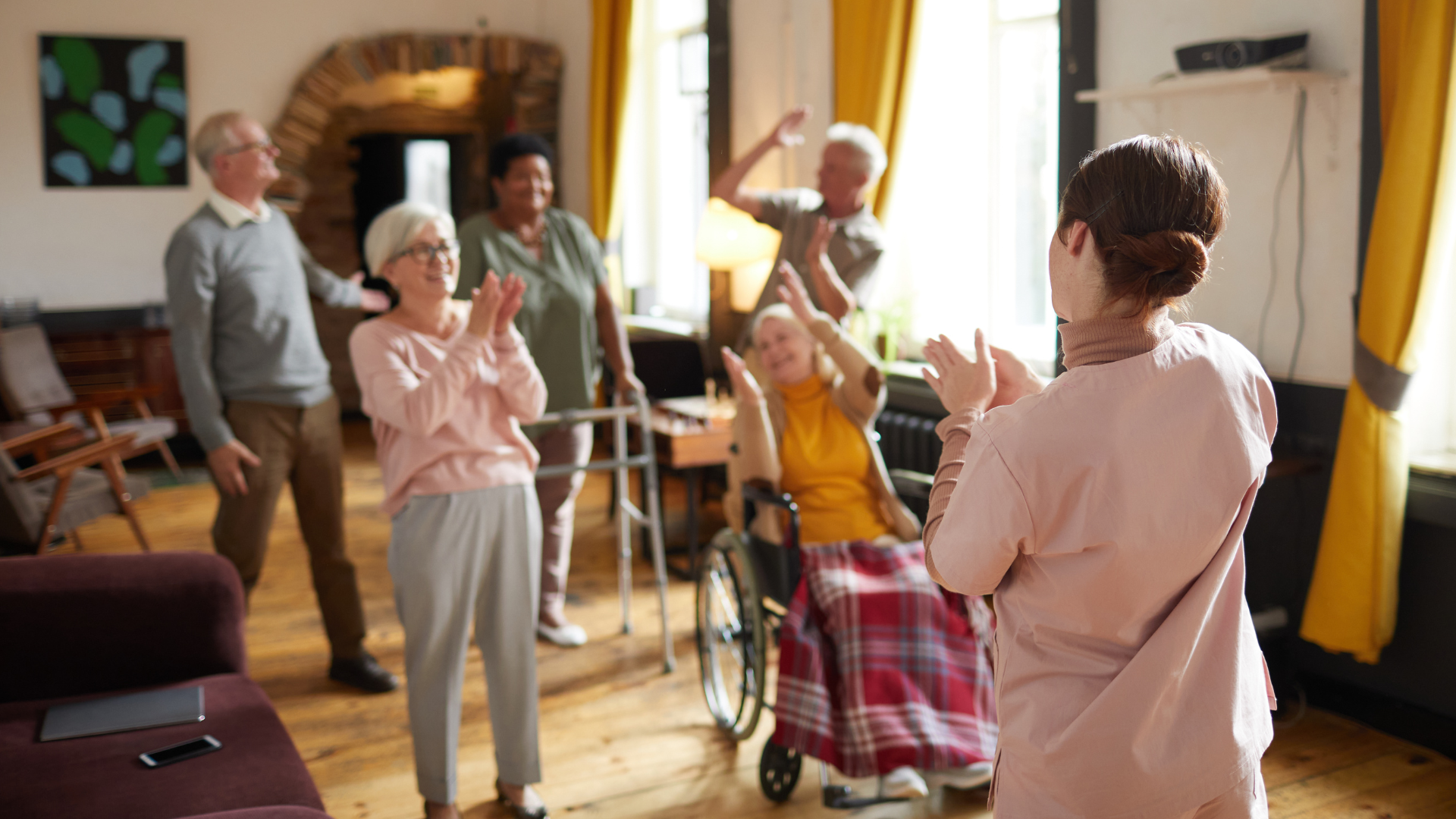
  • Movement practices: Gentle stretching in our spacious living area, seated yoga, walking the garden path, dancing to big band music in the same room where we eat dinner. Movement releases trapped energy and resets the nervous system.

Pillar 3: Positive Approach to Care® (Teepa Snow) — Communication That Honors

Teepa Snow, MS, OTR/L, has revolutionized dementia care by teaching us to see the world through the resident's altered perception. Her Positive Approach to Care® framework gives us practical, compassionate tools to connect—even when words fail.

What this looks like at Clover Care:

  • Eye-level connection: We never talk down to residents. We sit or kneel to meet their gaze. Eye contact (when welcomed) builds trust and reduces fear. With only 6 residents, every interaction can be this intentional.
  • Hand-under-hand guidance: Instead of grabbing someone's hand and pulling them forward, we slide our hand under theirs and gently guide. This preserves dignity and autonomy.
  • Bridging: Using touch to maintain connection as we move from one task to another. A hand on the shoulder, a gentle arm link—so they never feel abandoned mid-transition. Our home is small enough that transitions feel natural, not institutional.
  • Environmental adaptations: High-contrast plates for better visibility. Clocks with day/night indicators. Bathrooms with clear signage and warm lighting. Simplified choices (two outfits, not ten). Visual cues throughout our home. 
  • Understanding the "gems": Teepa Snow uses gemstones to describe dementia stages—Sapphire (early), Diamond (mild), Emerald (moderate), Amber (moderately severe), Ruby (severe), Pearl (end-stage). We assess where each resident is and adapt our approach accordingly. With 6 residents, we can truly individualize care plans daily.
  • Behavioral translation: We see behaviors as communication. Wandering = need for movement (we walk the garden path). Sundowning = nervous system overload (we dim lights, slow down, co-regulate). Repetitive questions = need for reassurance (we answer every time with patience). We respond to the need, not the behavior.
  • Sensory awareness: Recognizing that dementia changes sensory processing. Bright lights hurt. Loud sounds overwhelm. Crowded spaces terrify. Our home's design addresses this—soft lighting, quality acoustics, spacious rooms that never feel crowded with just 6 people.
Schedule A Tour
Clover Care Logo

Clover Care Memory Living
Rocklin, California

Tours:

By appointment (Mon–Sat)
Phone: 916-886-0154
Email:
hello@clovermemorycare.com

Legal/Attribution:

Clover Care integrates principles from Montessori Dementia Care, Somatic & Embodied practice, and the Positive Approach to Care® developed by Teepa Snow, MS, OTR/L. Positive Approach to Care® and PAC® are registered trademarks of Positive Approach, LLC.


© 2025 Clover Care. All rights reserved.